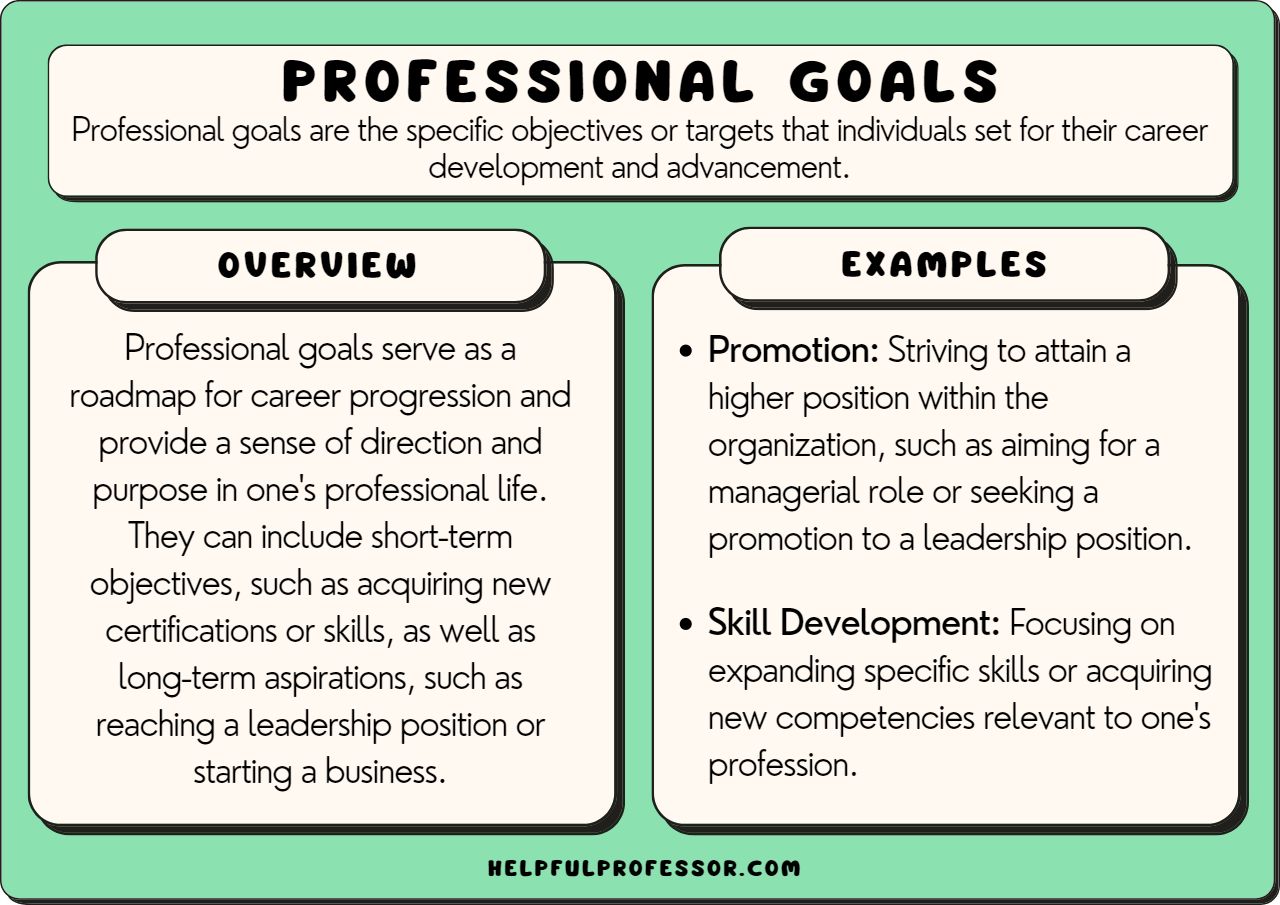
Examples of goals for work are specific, measurable targets that employees set to improve performance, advance careers, and contribute to organizational success. For instance, a marketing analyst might aim to increase lead conversion rates by 15% within six months.
Setting clear work goals has long been recognized as a catalyst for motivation, accountability, and continuous improvement. From Frederick Taylor’s early scientific management principles to modern agile frameworks, goal articulation aligns personal ambition with company objectives, fostering both individual fulfillment and collective profitability.
This article explores a range of goal categories, practical implementation steps, and real‑world illustrations. Readers will gain a toolbox of actionable ideas, FAQs, and tips to craft effective work goals that resonate across industries.
1. Performance Improvement Goals
Performance improvement goals focus on enhancing specific job functions, often through measurable metrics.
- Increase Output
Targeting a 20% rise in weekly production units can sharpen efficiency. At Toyota, line workers use Kaizen boards to track incremental output gains, leading to steady cost reductions.
- Boost Quality
Reducing defect rates from 3% to 1% improves customer satisfaction. A software QA team at Atlassian introduced automated regression testing, cutting bugs by 60% within a quarter.
- Enhance Speed
Shortening average response time from 48 to 24 hours elevates service levels. Zendesk agents adopted a new ticket‑triage protocol, halving resolution times and raising Net Promoter Scores.
These goals create a cause‑and‑effect loop: clear targets inspire focused effort, which yields measurable results, reinforcing further commitment.
2. Skill Development Goals
Skill development goals aim to acquire or refine competencies that increase employability and adaptability.
- Earn Certification
Obtaining a PMP credential validates project management expertise. Engineers at Siemens pursued PMP certification, resulting in a 30% rise in cross‑functional project leadership roles.
- Learn New Software
Mastering Tableau enables data‑driven storytelling. A sales analyst at HubSpot completed a Tableau bootcamp, producing interactive dashboards that accelerated quarterly forecasting.
- Develop Soft Skills
Improving public speaking through Toastmasters boosted confidence. A junior lawyer at Baker McKenzie reported winning more client presentations after six months of practice.
By linking skill acquisition to tangible business outcomes, employees see immediate relevance, accelerating the learning curve.
3. Career Advancement Goals
Career advancement goals map out a trajectory toward higher responsibility, leadership, or specialization.
- Seek Promotion
Targeting a senior analyst role within 12 months prompted a structured development plan. At Goldman Sachs, the employee completed cross‑departmental projects, securing the promotion on schedule.
- Expand Network
Attending three industry conferences annually broadened professional contacts. A fintech startup founder leveraged conference connections to secure a strategic partnership with Visa.
- Publish Thought Leadership
Writing two whitepapers on AI ethics positioned the researcher as an authority, leading to speaking invitations at the World Economic Forum.
These goals align personal ambition with organizational pathways, creating win‑win scenarios for talent retention and innovation.
4. Team Collaboration Goals
Team collaboration goals strengthen cohesion, communication, and collective output. Setting a target to hold weekly stand‑ups, for example, can reduce project bottlenecks and improve transparency. At Spotify, cross‑functional squads adopt shared OKRs, fostering alignment and accelerating feature releases.
When collaboration goals are quantified—such as achieving a 90% satisfaction score on internal surveys—they become actionable metrics that drive cultural improvement.
5. Customer‑Focused Goals
Customer‑focused goals tie employee effort directly to market impact. A goal to raise the Net Promoter Score (NPS) by 10 points pushes teams to refine service touchpoints. Netflix routinely sets content‑engagement targets, resulting in higher retention rates.
Embedding customer metrics into performance reviews ensures that every employee understands how their work influences the end‑user experience.
6. Innovation and Continuous Improvement Goals
Innovation goals encourage experimentation and the generation of new ideas. Setting a target to submit five improvement proposals per quarter cultivates a culture of creativity. Google’s “20% time” policy historically yielded products like Gmail and Google Maps.
By rewarding measurable innovation outputs, organizations transform risk‑aversion into proactive problem‑solving.
Frequently Asked Questions
Below are common queries about setting effective work goals.
Question 1: How many goals should an employee set per quarter?
Three to five well‑balanced goals typically provide enough focus without overwhelming capacity. This range allows for a mix of performance, development, and strategic objectives, ensuring holistic growth.
Question 2: What makes a goal SMART?
A SMART goal is Specific, Measurable, Achievable, Relevant, and Time‑bound. Each element clarifies expectations, facilitates tracking, and increases the likelihood of successful completion.
Question 3: Should goals be aligned with company OKRs?
Yes, aligning personal goals with organizational Objectives and Key Results creates coherence, ensures resources are directed toward shared priorities, and enhances visibility of individual contributions.
Question 4: How often should goals be reviewed?
Monthly check‑ins paired with a quarterly formal review strike a balance between agility and depth, allowing timely adjustments while maintaining strategic focus.
Question 5: Can goals include non‑quantitative outcomes?
Absolutely. Qualitative goals—such as improving team morale or enhancing communication—can be measured through surveys, peer feedback, or observed behavior changes.
Question 6: What role does feedback play in goal attainment?
Constructive feedback provides direction, highlights gaps, and reinforces progress. Regular, specific feedback loops help refine tactics and sustain motivation throughout the goal cycle.
Practical Tips for Setting Work Goals
Implementing effective goals becomes easier with clear steps.
Tip 1: Start with a vision. Define the broader outcome you want to influence, then break it into actionable targets.
Tip 2: Use the SMART framework. Ensure each goal meets specificity, measurability, achievability, relevance, and timing criteria.
Tip 3: Prioritize impact. Focus on goals that drive the greatest business value or personal growth.
Tip 4: Document progress. Keep a visible tracker—digital or physical—to monitor milestones and celebrate wins.
Tip 5: Seek accountability. Pair with a mentor or peer who can provide regular check‑ins and constructive critique.
Tip 6: Review and adjust. Treat goals as living documents; refine them based on feedback and changing circumstances.
Tip 7: Celebrate completion. Recognize achievements publicly to reinforce positive behavior and motivate future goal‑setting.
Conclusion
This guide outlined diverse examples of goals for work, ranging from performance metrics to innovation targets. By understanding the purpose behind each category and applying structured methods, employees can craft goals that drive measurable results and personal fulfillment.
Equipped with actionable tips and a clear FAQ, the next step is to translate these concepts into a personalized goal plan—setting the stage for sustained growth and organizational success.

